


Frontend testing is the process of checking the visual and interactive parts of an application — like buttons, forms, menus, layouts, animations, and responsiveness — to ensure they work properly across different devices and browsers.
Since users directly see and interact with the frontend, even small issues (like broken buttons or layout shifts) can damage user experience. That’s why frontend testing is very important in modern web development, especially for frameworks like React, Angular, and Vue.
Table of Contents
Types of Frontend Testing
| Test Type | What It Means (Beginner Explanation) | Example |
| Unit Testing | Tests small pieces like a single button or function | Check if a login button triggers function |
| Integration Testing | Tests how components work together | Form + validation + API |
| End-to-End (E2E) Testing | Tests full user journey | Login → Add to cart → Payment |
| UI Testing | Checks visual elements | Button color, alignment |
| Cross-Browser Testing | Tests on Chrome, Firefox, Safari | Layout consistency |
| Responsive Testing | Tests mobile, tablet, desktop view | Media queries |
| Accessibility Testing | Ensures disabled users can access site | Screen reader support |
Manual vs Automated Frontend Testing
| Feature | Manual Testing | Automated Testing |
| Performed By | Human tester | Testing tools/scripts |
| Speed | Slow | Fast |
| Cost | Lower initially | Higher setup cost |
| Accuracy | May miss errors | Consistent |
| Best For | UI design review | Regression & repeated tests |
| Example | Clicking button manually | Selenium script running tests |
Popular Frontend Testing Tools
| Tool | Type | Best For | Free/Paid |
| Jest | Unit Testing | React apps | Free |
| React Testing Library | Component Testing | React UI testing | Free |
| Cypress | E2E Testing | Modern web apps | Free + Paid |
| Selenium | Browser Automation | Cross-browser | Free |
| Playwright | E2E Testing | Fast automation | Free |
| TestCafe | E2E Testing | Simple setup | Free |
| BrowserStack | Cross-browser | Real device testing | Paid |
| LambdaTest | Cloud testing | Browser/device testing | Paid |
Frontend Testing in React
| Testing Type | React Tool | What It Tests |
| Unit | Jest | Component logic |
| UI Interaction | React Testing Library | Button clicks |
| E2E | Cypress | Full application flow |
| Snapshot Testing | Jest | UI changes comparison |
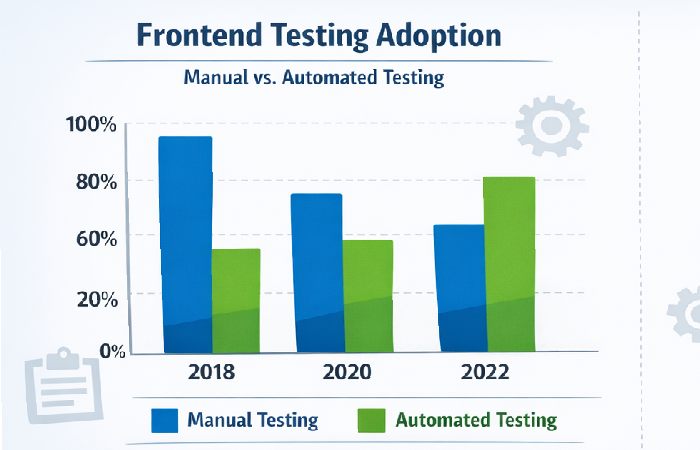
Manual vs Automated Testing Adoption (2015–2026)
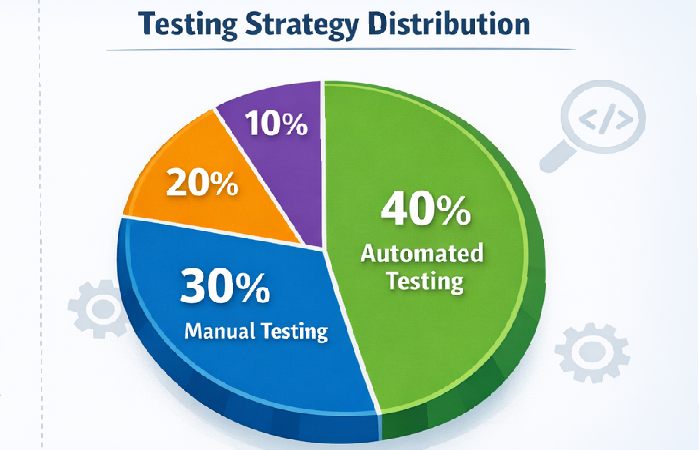
Testing Strategy Usage in 2026
Programming Languages Used in Frontend Testing
| Language | Used With | Why Popular |
| JavaScript | Jest, Cypress | Native to web |
| TypeScript | Angular, React | Type safety |
| Python | Selenium | Easy syntax |
| Java | Selenium | Enterprise apps |
| C# | Selenium | .NET apps |
Free vs Paid Testing Solutions
| Feature | Free Tools | Paid Tools |
| Cost | $0 | Subscription |
| Device Testing | Limited | Real devices |
| Scalability | Limited | High |
| Support | Community | Dedicated support |
| Example | Jest, Selenium | BrowserStack |
Comparison of Best Frontend Testing Tools
| Tool | Speed | Ease of Use | Cross-Browser | Best For |
| Cypress | Fast | Easy | Limited | Modern apps |
| Selenium | Moderate | Complex | Excellent | Enterprise |
| Playwright | Very Fast | Moderate | Excellent | Advanced automation |
| Jest | Very Fast | Easy | N/A | Unit testing |
Frontend Testing Strategies
| Strategy | Explanation |
| Test Early | Start testing during development |
| Use Automation | Reduce manual repetition |
| Cross-Browser Checks | Test Chrome, Firefox, Safari |
| CI/CD Integration | Run tests automatically on deployment |
| Accessibility First | Ensure inclusive design |
Why Frontend Testing is Important
| Reason | Explanation |
| User Experience | Prevents broken UI |
| Brand Reputation | Professional appearance |
| Security | Prevents frontend vulnerabilities |
| Performance | Detects slow loading |
| Compatibility | Works across devices |
Future of Frontend Testing
| Trend | Description |
| AI Testing Tools | AI auto-generates test cases |
| Visual Regression Testing | Detects UI changes automatically |
| Cloud Testing | Real device browser testing |
| Continuous Testing | Integrated in DevOps pipelines |
FAQs
- What is frontend testing?
It checks the visual and interactive parts of a web app.
- Is manual testing enough?
No, automation is needed for large projects.
- Which tool is best for React?
Jest + React Testing Library + Cypress.
- Is Selenium outdated?
No, it’s still widely used for enterprise apps.
- Do beginners need coding for automation?
Yes, basic JavaScript or Python knowledge helps.
Conclusion
Frontend testing ensures that users experience smooth, functional, and visually correct applications across different devices and browsers. As web applications become more complex, relying only on manual testing is no longer enough. Automated tools like Jest, Cypress, and Selenium help developers test faster and more accurately. Modern frameworks such as React encourage component-based testing strategies, improving reliability. With the rise of AI-driven testing and cloud-based cross-browser platforms, frontend testing is becoming smarter and more efficient.
For beginners entering web development, understanding frontend testing is essential for building high-quality, user-friendly applications in today’s competitive digital world.