


Software development team productivity is one of the most critical success factors for tech-driven businesses. Whether it’s startups building MVPs or global enterprises scaling platforms, productivity directly impacts delivery speed, code quality, and business growth.
Tech leaders like Google and Microsoft continuously invest in tools, agile processes, and performance analytics to improve team output without causing burnout.
This guide covers everything about software development team productivity — its meaning, core components, metrics, tools, job roles, salaries, and best practices.
Table of Contents
What Is Software Development Team Productivity?
Software development team productivity refers to how efficiently and effectively a development team delivers high-quality software within a given timeframe.
It is not just about writing more lines of code — it’s about:
- Delivering features faster
- Reducing bugs
- Improving collaboration
- Meeting deadlines
- Maintaining code quality
Modern productivity focuses on value delivered, not just output volume.
Software Development Team Productivity – Structured Overview
| Category | Description | Why It Matters | Example Metrics / Actions |
| Efficiency | How effectively the team uses time and resources | Reduces waste and improves delivery speed | Cycle Time, Lead Time |
| Quality | Stability and reliability of delivered software | Fewer bugs, better user experience | Defect Rate, Code Review Score |
| Speed | How quickly features move from idea to deployment | Faster time-to-market | Deployment Frequency |
| Value Delivery | Business impact of delivered features | Focus on meaningful output | Customer Satisfaction, Feature Adoption |
| Collaboration | Communication and teamwork quality | Reduces delays and misunderstandings | Stand-ups, Retrospectives |
| System Effectiveness | Stability and performance of systems | Minimizes downtime and incidents | Change Failure Rate |
| Process Optimization | Workflow structure and automation | Improves scalability | CI/CD Automation |
| Developer Experience (DevEx) | Ease of development environment and tools | Reduces burnout and boosts morale | Build Time, Tool Efficiency |
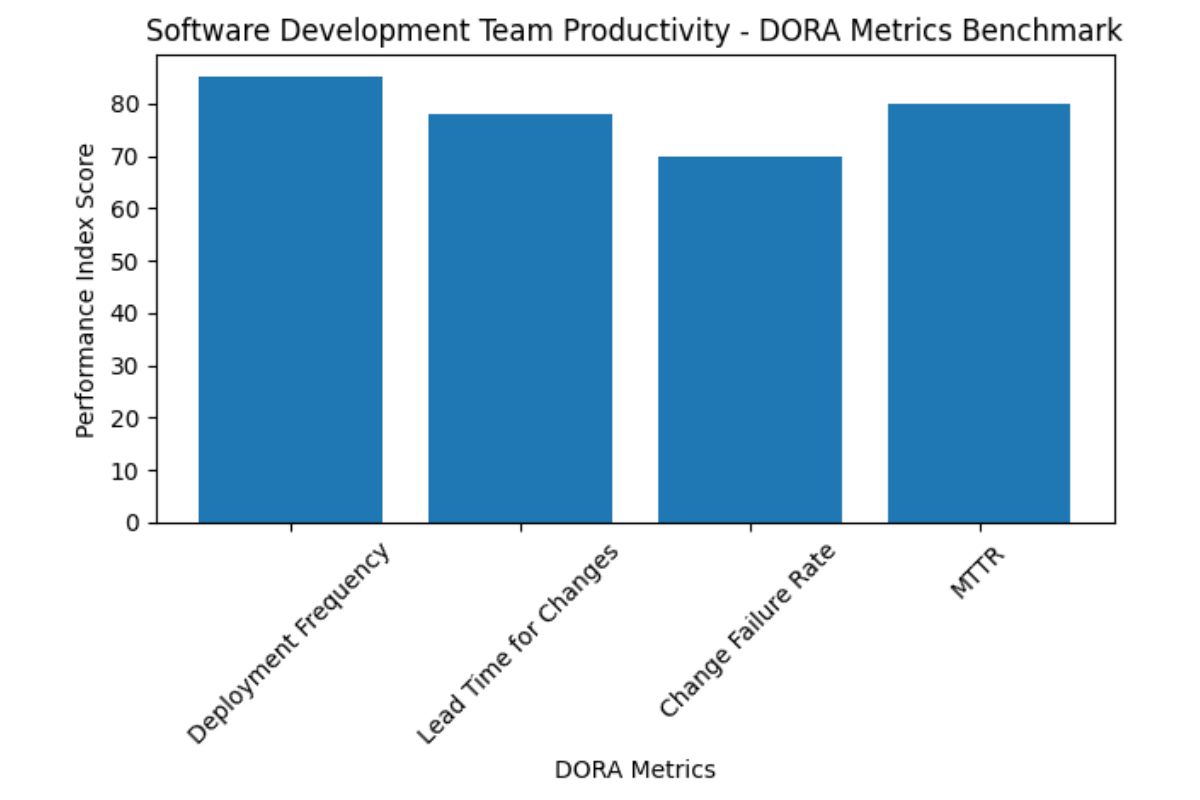
| DORA Metrics | Industry-standard DevOps performance indicators | Benchmarks high-performing teams | Deployment Frequency, MTTR |
| SPACE Framework | Holistic productivity measurement model | Balances performance & satisfaction | Satisfaction, Performance, Activity, Communication, Efficiency |
Software Development Team Productivity—DORA Metrics Benchmark
How Software Development Team Productivity Works
Productivity is influenced by structured processes and tools:
- Agile Methodology – Sprint planning, retrospectives, and backlog grooming.
- Version Control – Using Git for collaboration.
- CI/CD Pipelines—Continuous integration and deployment.
- Performance Monitoring – Tracking cycle time, lead time, and bug rate.
- Feedback Loops – Code reviews and QA testing.
Companies like Atlassian (Jira) and GitHub provide tools that improve workflow visibility and collaboration.
What Is Productivity in Software Development?
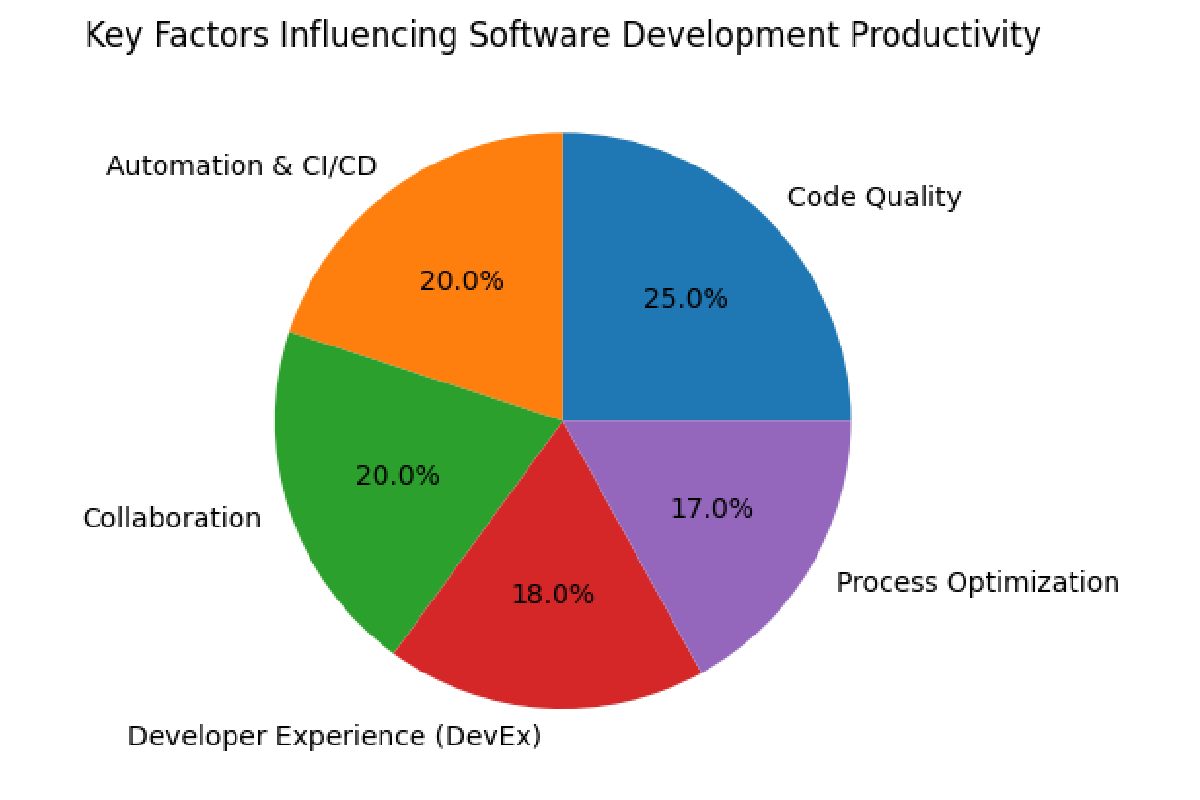
Productivity in software development is the amount of business value delivered per unit of time, without compromising quality.
It includes:
- Feature delivery speed
- Code quality
- Collaboration efficiency
- Customer satisfaction
- System reliability
Modern companies like Google measure productivity based on impact, not lines of code.
How to Measure Development Team Productivity?
Measuring productivity requires a mix of quantitative and qualitative metrics.
Key Metrics:
| Metric | What It Measures | Why It Matters |
| Velocity | Work completed per sprint | Sprint performance |
| Cycle Time | Task completion time | Process efficiency |
| Lead Time | Idea to delivery time | Business responsiveness |
| Deployment Frequency | Release rate | DevOps maturity |
| Defect Rate | Bugs per release | Code quality |
Tools like Atlassian Jira help teams track these metrics effectively.
Important: Metrics should guide improvement, not pressure developers.
What Are the 5 Pillars of Software Development?
The five pillars of software development create the foundation for high-performing teams:
- Planning
Clear requirements, sprint planning, roadmap alignment, and backlog prioritization.
Without planning, teams waste time building the wrong features.
- Design
Strong architecture and UI/UX planning prevent future technical debt.
- Development
Writing clean, maintainable, and scalable code using version control systems like GitHub.
- Testing
Automated and manual testing ensure fewer bugs and higher reliability.
- Deployment & Maintenance
Using CI/CD tools like GitLab for smooth releases and continuous improvements.
When these pillars are strong, productivity improves naturally.
What Is the 80/20 Rule in Software Development?
The 80/20 rule (Pareto Principle) states:
80% of results often come from 20% of efforts.
In software development, this means:
- 20% of features deliver 80% of user value
- 20% of bugs cause 80% of system issues
- 20% of code may require 80% of maintenance
Smart teams focus on high-impact tasks instead of trying to perfect everything.
What Are the 5 Main Factors That Affect Productivity?
- Team Communication
Poor communication leads to misunderstandings and delays.
- Tooling & Automation
Modern tools reduce repetitive work.
- Clear Requirements
Unclear goals create rework and frustration.
- Team Skill Level
Experienced developers solve problems faster.
- Work Environment
Burnout and distractions significantly reduce productivity.
Top Tools for Improving Development Team Productivity (2026)
| Tool | Purpose | Popular For |
| Atlassian Jira | Project Management | Sprint tracking |
| GitHub | Version Control | Code collaboration |
| GitLab | DevOps Platform | CI/CD automation |
| Slack | Team Communication | Collaboration |
| SonarQube | Code Quality | Static analysis |
Software Development Productivity Courses
Here are recommended certifications and learning paths:
- Agile & Scrum Certification (CSM, PMI-ACP)
- DevOps Certification (AWS, Azure)
- Git & Version Control Courses
- Software Engineering Management Programs
- CI/CD Automation Training
- Online courses on platforms like Coursera and Udemy
Conclusion
Software development team productivity is about delivering high-quality software faster and smarter. With the right tools, agile processes, automation, and leadership, organizations can significantly improve output while maintaining developer satisfaction. As technology evolves, productivity optimization remains a top priority for engineering teams worldwide.
Short FAQs
- How is developer productivity measured?
Through metrics like velocity, cycle time, deployment frequency, and bug rate. - Does more code mean higher productivity?
No. Productivity focuses on value delivered, not lines of code. - What tools improve development productivity?
Jira, GitHub, GitLab, CI/CD tools, and collaboration platforms. - Is productivity tracking harmful?
If misused, yes. Metrics should guide improvement, not create pressure. - What is the best methodology for team productivity?
Agile and DevOps practices are widely considered the most effective.